
Playing your best golf in challenging weather starts with the right gear—and a high-performance jacket designed for wind and rain is essential for maintaining comfort, flexibility, and focus on the course. The best golf jackets for wind and rain combine waterproof yet breathable technology with a tailored, athletic fit that allows for a full, unrestricted swing, even in a sudden downpour or gusty conditions.
In this post, we’ll break down the top features to look for and recommend the leading jackets that keep you dry, block the wind, and help you play confidently, no matter what the forecast brings.
The Best Golf Jackets for Wind and Rain That Don’t Restrict Your Swing
Why Waterproof and Windproof Golf Jackets Matter for U.S. Golfers

When the weather turns, the best golf jackets for wind and rain can be the difference between grinding through a miserable round and playing steady, focused golf. A good waterproof and windproof shell does more than keep you dry. It helps your body hold on to heat, keeps moisture off your base layers, and lets you make a full turn without feeling like your shoulders are trapped in a regular raincoat. That combination protects your swing mechanics as much as your comfort.
Rain and wind change how your body feels over several hours, and that quickly shows up in your score. Wet sleeves and grips make the club harder to control and dull the feedback you rely on for distance and touch. As your hands get cold, your grip pressure often changes without you noticing. At the same time, constant wind exposure pulls warmth away from your core, which drains energy and makes it harder to stay focused over a full round. A purpose-built jacket creates a stable microclimate so your posture, tempo, and timing stay more consistent from the first tee to the last green.
The best golf jackets for wind and rain are designed around this kind of performance. They use waterproof membranes and taped seams to keep water out, but they also need to breathe, so you do not end up sweaty and chilled once you stop walking. Lightweight construction and a bit of stretch help the jacket move with you so you can commit to each swing instead of compensating for tight fabric.
How Wind And Rain Change Your Golf Game
Wind and rain alter almost every part of a round. Soft, wet fairways change how the ball sits and how far it rolls. Greens can spin more and roll slower, so your usual yardages may not apply. On top of that, gusts force you to choose different clubs and shot shapes, and they punish any swing made with tense shoulders or rushed tempo. If your outer layer is heavy, noisy, or restrictive, you are more likely to guide the club instead of swinging freely.
A well-chosen jacket helps manage those conditions. Waterproof fabric keeps your forearms and hands drier, which is critical for wedge play and putting. Wind blocking materials reduce the constant chill that comes from standing on exposed tees and fairways, which helps your fine motor control stay reliable when it is time to hit a delicate chip or a short putt. Breathable panels let excess heat escape on long walks between shots, so you do not overheat and then cool down too quickly when you stop.
What Sets Golf Jackets Apart From Everyday Outerwear?
Golf-specific jackets look similar to regular rain shells on a hanger, but they are cut and engineered very differently. Articulated sleeves allow a full shoulder turn without bunching at the elbow or pulling across the back. Designers adjust seam placement so nothing binds during the takeaway or rubs against your neck at the top of the backswing. Many models use low bulk stretch fabrics that stay close to the body without feeling tight, which keeps noise and distraction to a minimum.
Pocket placement is another small but important detail. On a golf jacket, pockets sit where they will not interfere with your grip or your hip turn, and zippers are kept low profile so they do not dig into your midsection when you rotate. Most pieces are also light and packable, so you can stash them in a bag and pull them out when a front moves in.
All of these design choices add up to outerwear that protects you from wind and rain without asking you to change your swing. That is what separates true golf gear from everyday jackets and why it is worth paying attention to the details before your next bad-weather round.
Key Features to Look for in the Best Golf Jackets
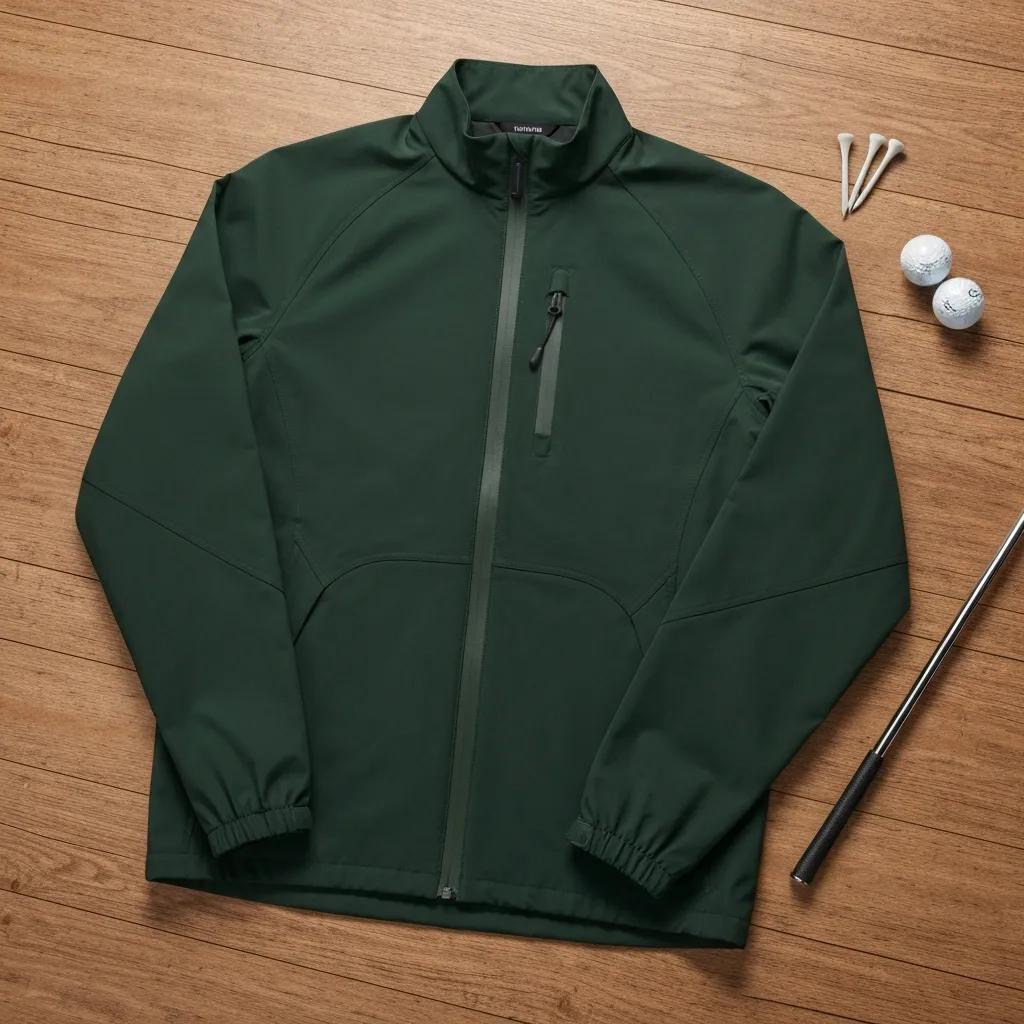
When you are trying to choose the best golf jackets for wind and rain, it helps to focus on a few technical details that actually affect how the jacket feels during a full round. The big ones are waterproof rating, breathability, seam sealing, stretch, sleeve design, and small but important touches like zipper construction and hem adjustments. Together, these details determine whether you stay dry, comfortable, and able to swing freely, or end up fighting your jacket on every tee box.
Waterproof rating, usually shown in millimeters, tells you how much water pressure the fabric can handle before it starts to leak. Many golf shells sit somewhere between 5,000 and 20,000 mm, with higher numbers offering better protection in sustained rain. Breathability, often listed as MVTR, describes how quickly moisture vapor can escape from the inside of the jacket. Ratings from 5,000 to 20,000 g/m²/24h are common, and higher values suit walkers or players who generate more body heat. Seam sealing matters just as much as fabric numbers, since fully taped seams stop water from sneaking in through the stitching.
Here is a quick reference for those specs:
| Feature | What It Means | Typical Spec / Example |
|---|---|---|
| Waterproof rating | Water pressure fabric resists before leaking | 5,000 to 20,000 mm |
| Breathability (MVTR) | Rate moisture vapor escapes through the fabric | 5,000 to 20,000 g/m²/24h |
| Seam sealing | Tape over stitches to prevent water entry | Fully taped seams for true waterproof jackets |
Once you understand these numbers, you can read product descriptions for the best golf jackets for wind and rain with a more critical eye. Look for a clear waterproof rating matched with fully taped seams if you often play in steady rain, and make sure breathability is high enough for the way you move around the course. Pay attention to mobility features as well. Stretch panels, articulated sleeves, and a golf specific cut around the shoulders and back will let you complete a full turn without feeling restricted.
How Waterproof Systems Like GORE-TEX And RAIN.RDY Work
Many top golf shells rely on membrane technologies such as GORE-TEX or brand-specific systems like RAIN.RDY. These use a thin, microporous layer that blocks liquid water from the outside while allowing water vapor from sweat to move out. The idea is simple: keep rain from soaking your base layers, but avoid the clammy feeling that comes from trapping heat and moisture inside.
These membranes are usually built into 2.5 or 3 layer constructions. A 2.5 layer jacket often feels lighter and packs smaller, which is useful if you carry it in your bag and only pull it out when a storm rolls in. A 3 layer design tends to be more durable and better suited to regular use, since the membrane is protected between inner and outer fabrics. On top of that, most jackets use a DWR, or Durable Water Repellent, on the surface to help water bead up and roll off. Over time that finish will wear down and need refreshing, but the underlying membrane continues to provide the main waterproof barrier.
Seam taping is the final piece of the puzzle. Even the best fabric will leak if water can creep in through stitch lines, so high quality rain gear covers those seams with tape during construction. Understanding the difference between a full membrane laminate and a simple coating helps set realistic expectations for how long the jacket will stay waterproof, how flexible it feels, and how you need to care for it.
Why Windproofing Matters In Golf Outerwear
While waterproof ratings get most of the attention, wind protection is just as important on the course. A jacket that blocks wind keeps your core temperature more stable, which protects your grip, tempo, and decision making across 18 holes. Windproof fabrics reduce convective heat loss, so you are less likely to tense up or rush your swing because you feel chilled and uncomfortable over the ball.
Windproofing can come from different constructions. Some jackets use tightly woven face fabrics that slow airflow, while others add a light laminate or membrane layer that stops wind almost completely without adding bulk. For golfers, the best options combine this protection with some stretch, particularly through the shoulders and upper back, so you do not have to alter your swing path to adapt to the jacket.
The goal is a low-profile shell that moves quietly, stays close to the body without binding, and shields you from gusts on exposed tees and fairways. When windproofing is built correctly into the design, you think less about your clothing and more about club selection and target, which is exactly what good outerwear should allow you to do.
How To Choose The Best Golf Jacket For Wind And Rain

Choosing the best golf jackets for wind and rain starts with being honest about the conditions you usually face. A player in the Pacific Northwest needs a different setup than someone dealing with cool, breezy mornings and passing showers in the Southeast. Think about whether your typical rounds involve heavy downpours, light rain with steady wind, or mainly cold, blustery days. Heavy, sustained rain calls for a fully waterproof shell with a higher rating and taped seams, while lighter showers and wind often feel more comfortable in a breathable, windproof shell that resists water without feeling overbuilt.
Once you have the climate in mind, shift your focus to fit and mobility. A jacket can have impressive waterproof numbers and still be frustrating if the cut is too slim or the shoulders bind at the top of your backswing. For golf, a comfortable swing should come first. Look for designs that allow a full shoulder turn, with enough room through the upper back and sleeves to let you stay relaxed over the ball. After that, check the waterproof rating, seam sealing, and smaller details like zipper construction and hem adjustments. Those elements round out performance but should not come at the cost of an easy, natural swing.
Packability and weight matter if you regularly start your round in clear weather and only pull on a shell when conditions change. Walkers often prefer a lightweight, compressible jacket that disappears in the bag until it is needed. When you narrow your options, try the jacket on over the layers you actually wear on the course, not just over a T-shirt at home. Make a few practice swings and reach into your pockets to confirm that nothing pulls, rides up, or blocks your range of motion. The best golf jackets for wind and rain feel like part of your normal setup, not a distraction you have to work around.
Golf Shot Apparel, for example, builds pieces with a golf-first mindset that favors comfort and mobility. Their Performance Golf Hoodie works well as a versatile mid layer for cool, damp rounds. It offers stretch and a low bulk profile that fits comfortably under a dedicated rain shell. It is not intended to replace a fully waterproof jacket with taped seams, but rather to serve as a breathable, wind resistant layer in a simple system you can adjust as conditions change.
Best Materials For Breathability And Mobility On The Course
Fabric choice has a big influence on how a jacket feels over 18 holes. Many of the best golf jackets for wind and rain use polyester shells blended with elastane or spandex to provide four way stretch. This combination helps the fabric move with your swing instead of fighting it, while still shedding light rain and blocking gusts. When a waterproof membrane is added to recycled polyester, you gain stronger rain protection along with enough breathability to keep you from overheating on long walks between shots.
Construction styles matter as well. A 2.5 layer design often balances packability and weather protection, which suits golfers who want something light that still holds up in bad weather. Underneath the shell, merino wool base layers are a strong choice because they wick moisture, regulate temperature, and resist odor. Synthetic mid layers add quick drying insulation that keeps you warm without feeling bulky under your jacket. When each layer is chosen with purpose, you stay drier, more comfortable, and free to rotate fully as the weather shifts from hole to hole.
Design Details That Improve On-Course Function
Thoughtful design details are what separate a true golf jacket from a general outdoor shell. Articulated sleeves allow your arms to track naturally through the swing instead of bunching at the elbows or pulling across the shoulders. Low-profile hoods that sit flat or stow away when not in use keep your head-turn clear, so you can see your target without wrestling extra fabric. Adjustable cuffs and hems help seal out water and wind while still letting you fine-tune the fit over gloves and layers.
Zippers and pockets deserve attention, too. Waterproof or water-resistant zips keep water from creeping in at the front or through chest pockets, and their placement should avoid interfering with your posture or a carried bag. Ideally, pockets sit where you can access tees, markers, and a yardage book without twisting the whole jacket. Venting, whether through mesh-lined pockets or small underarm openings, helps you release heat during brisk walks or warmer showers so you stay comfortable instead of clammy.
Reinforced shoulders can be useful if you often carry your bag, since they resist wear in that high-friction area. All of these details are more important than decorative extras when the goal is dependable protection on the course. A jacket that gets the fundamentals right will support your game across many seasons, rather than just looking good on the rack.
How a Performance Golf Hoodie Stacks Up For Wind And Rain

When you compare a performance golf hoodie to the best golf jackets for wind and rain, it helps to be clear about what role each piece plays. A fully waterproof shell is built to handle long stretches of steady rain and strong gusts, while the hoodie is designed first for comfort, stretch, and a clean on-course look. It offers light weather protection, but it does not include the high waterproof ratings or fully taped seams that serious rain gear relies on.
The table below shows how the hoodie aligns with ideal specs for heavy conditions.
| Attribute | Performance Golf Hoodie (notes) | Ideal Spec For Heavy Rain And Wind |
|---|---|---|
| Waterproof rating | Water resistant knit, not lab rated | Around 10,000 to 20,000 mm with fully taped seams |
| Breathability (MVTR) | Water-resistant knit, not lab rated | Around 10,000 g/m²/24h or higher for active play |
| Mobility | High, thanks to the knit and stretch fabric | Very high, with articulated sleeves and stretch panels |
Seen this way, the hoodie is clearly a mobility-first mid-layer. It excels in comfort and range of motion, but is not meant to replace a true waterproof shell when you are facing hours of driving rain. Understanding that distinction helps you use it where it performs best, and lean on a dedicated rain jacket when conditions demand more protection.
Why The Performance Golf Hoodie Works In Light Bad Weather
Where the Performance Golf Hoodie shines is in the kind of mixed weather many golfers actually see most often. On cool rounds with light showers or a steady breeze, the stretch fabric and golf-focused cut let you swing freely while still taking the edge off wind and drizzle. The low bulk build sits close to the body without feeling tight, which keeps noise and distraction to a minimum through the swing.
The hoodie offers a reasonable level of water resistance, so short showers, mist, or damp air do not immediately soak your base layer. At the same time, the knit construction and lack of a full waterproof membrane mean that prolonged, heavy rain will eventually work through the fabric. It is better to think of the hoodie as a flexible mid-layer that adds warmth, light wind protection, and some weather resistance, rather than as a standalone rain solution. On days when the forecast is uncertain, pairing it with one of the best golf jackets for wind and rain gives you coverage you can adjust as conditions shift.
Knowing its limits makes it easier to choose the right combination for each round. Reach for the hoodie when you want comfort and mobility in cool, unsettled weather, and be ready to add a shell on top when the radar turns darker.
Layering Strategy For Changing Course Weather
A simple layering plan is usually more effective than relying on a single heavy jacket. Start with a moisture-wicking base layer to move sweat away from your skin, then use a breathable mid layer like the Performance Golf Hoodie to add warmth and maintain full movement through your shoulders and torso. When clouds build or the wind picks up, you can pull a lightweight waterproof shell over the top to handle direct rain and stronger gusts.
On days with sustained rain, a high-rated waterproof shell with taped seams over the hoodie keeps you dry while still letting you benefit from the hoodie’s stretch and insulation. When conditions are mostly dry but windy, the hoodie can be combined with a windproof, lightly water-resistant shell for a balance of airflow and protection. This modular approach keeps your bag lighter, since each piece can be used in more than one way, and it allows you to fine-tune your comfort between holes without changing your swing.
By treating the hoodie as a core mid layer and pairing it with outer shells that match the forecast, you can build a small, versatile system that handles a wide range of conditions. That kind of setup is what makes the best golf jackets for wind and rain feel genuinely useful instead of like single-purpose items that only leave the bag a few times a year.
Frequently Asked Questions
1. What should I consider when choosing a golf jacket for different weather conditions?
Match the jacket to the weather you play in. For heavy rain, choose a jacket with a solid mm rating and fully taped seams. For windy, drizzly days, prioritize windproofing and water resistance. Always confirm the jacket allows a full range of motion with articulated sleeves and a golf-specific cut. If you carry the jacket between holes, packability matters too. Picking features that fit your local climate keeps you comfortable and playing your best.
2. How do I maintain my golf jacket to ensure its longevity?
Follow the manufacturer’s care instructions. In general, wash in cold water on a gentle cycle and avoid fabric softeners, which can harm water repellency. Air-dry when possible to protect coatings and membranes. Reapply DWR treatments as needed to restore surface water beading. Check seams and zippers regularly and repair small issues before they affect performance.
3. Are there specific brands known for high-quality golf jackets?
Yes — GORE-TEX is known for durable membranes, and brands like Under Armour and Adidas offer advanced waterproof and windproof systems tailored to athletes. Golf-focused labels, including Golf Shot Apparel, design pieces with the swing in mind. When choosing a brand, look at materials, construction, customer reviews, and how well the jacket meets your specific weather and mobility needs.
4. Can I wear a regular jacket for golfing in bad weather?
You can, but a regular jacket often lacks the design details that protect your swing. Everyday jackets may restrict shoulder movement, have poorly placed pockets, and lack true wind– and waterproofing. For consistent play in bad weather, a golf-specific jacket will better preserve your mechanics and comfort.
5. How do I know if a jacket is truly waterproof?
Check the waterproof rating (mm) — a rating of 10,000 mm or higher is generally solid for heavy rain — and look for fully taped seams. Manufacturer notes about membranes (like GORE-TEX) and real-world reviews also help confirm performance. Construction details give the clearest signal of true waterproofing.
6. What is the importance of breathability in golf jackets?
Breathability matters because you’ll generate heat and sweat while playing. A breathable jacket lets moisture vapor escape so you don’t overheat or end up damp inside your layers. Look for higher MVTR numbers if you walk the course or play actively — the right balance of waterproofing and breathability keeps you dry and comfortable.
7. How can I layer effectively for varying weather conditions while golfing?
Layer by function: moisture-wicking base layer, insulating mid-layer (like our Performance Golf Hoodie) for warmth and motion, and a protective shell for wind and rain. This modular approach lets you add or remove layers between holes and keeps your swing unrestricted across changing conditions.
Conclusion
Don’t let unpredictable weather dictate your performance on the course. The right golf jacket is your essential shield against wind and rain, combining waterproof protection with breathable comfort to keep you focused on your game. At Golf Shot Apparel, we carry outerwear that stands up to the elements without sacrificing style or mobility. Ready to conquer any condition? Call 888-950-9515 or visit our shop today to explore our collection of premium golf jackets. Because the perfect round shouldn’t depend on the forecast.